Sparkling Mindz
  • Home
  • School
    • Young Changemakers' Summit
    • Changemaker Missions >
      • SM Plates (Healthy Food Practices)
      • TRUI (Climate Change)
      • CSP (Community, Stories and Practices)
      • MCV (Mission Child Vulnerability)
    • Poetic Fete
    • Children as Changemakers in the City
  • Preschool
  • Programs
    • The Future of Education Summit 2025
    • Wizets
    • Child in the City Heritage Walks
    • Young Thinkers and Achievers
    • Early Learner's Enrichment
    • Summer Camps
  • Enquiry
  • Testimonials
  • Blog

'Princesses Are Not Just Pretty!' Is it a boys' book or girls' book?

4/1/2020

Comments

 
Picture
"He didn't read the book because it's for girls, he said."

"He didn't read it. He didn't like it at all. "

We received this feedback from the parents of two of the 4 year olds when they went home with 'Princesses Are Not Just Pretty' book after the Library Hour. The facilitator thought it would be interesting to get to the bottom of this 'boy-girl' bias for the book by reading it and discussing the same book in class. ​
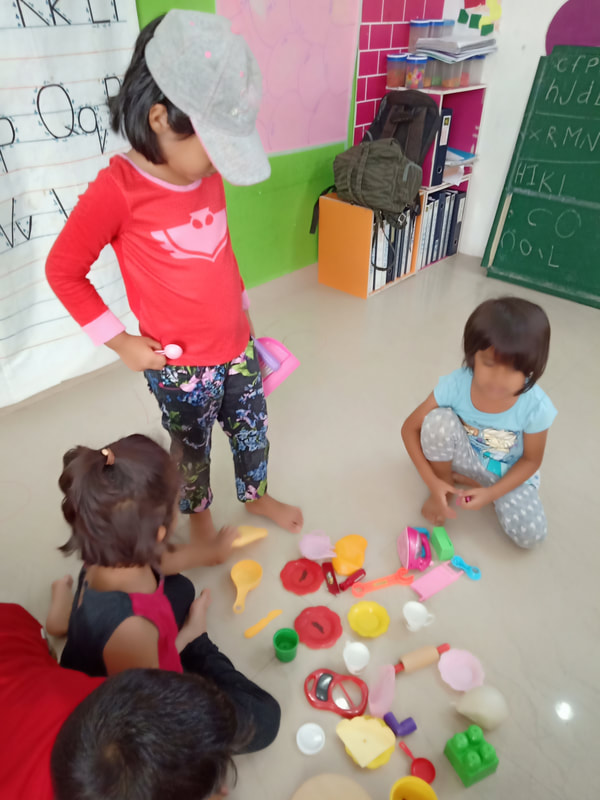
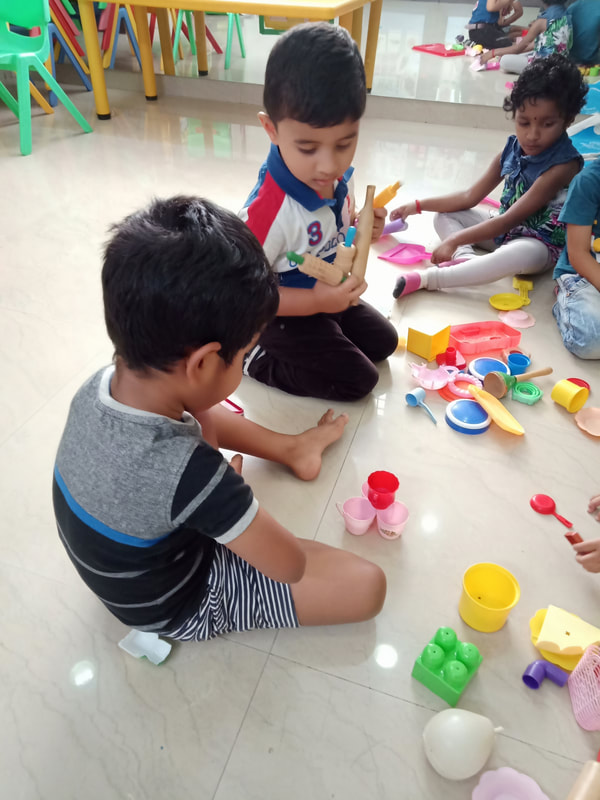
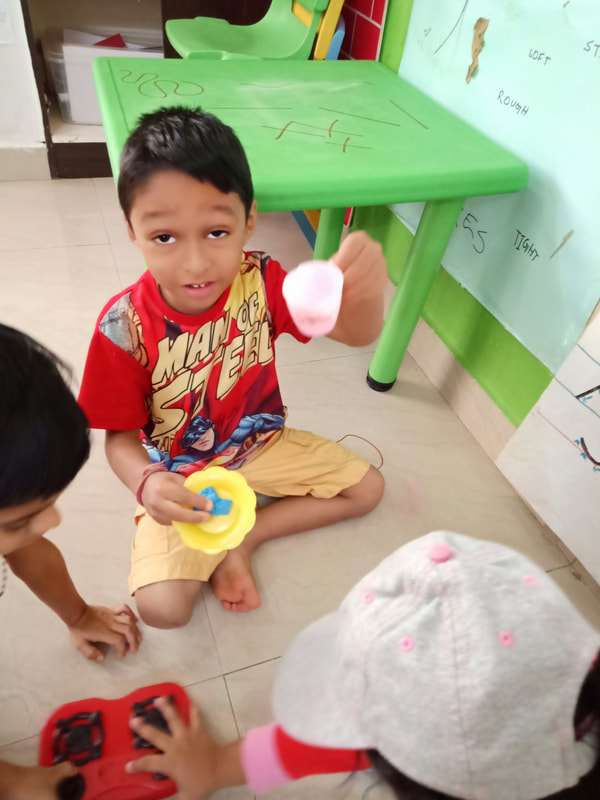
When the preschoolers come in the morning to school, they have a play session (called Invitation To Play) where they are given a variety of things to play with to begin their day. Today, we decided to setup a kitchen set to play with where they were all to throw a birthday party for an imaginary princess which, they all happily agreed to.
K and T: I am making tea for the princess. 
An: I am cleaning up, folding and ironing all her clothes. 
S: I am making chicken for the princess. 
Kr, H and At: We are all cleaning up ma'am for the princess!
Together they all threw that princess the best birthday party ever and cleaned up after!


Post this, they all sat around for the book reading. Not many seemed excited about this particular book, especially the two boys who didn't want to read it but we were on an exploratory mission, so we went ahead anyway.

F: Do you think this book is only for girls?
H: No it's for boys and girls. Because there are kings and princesses in the book. 
K observing and nodding as if agreeing to the question whether this book is only for girls.
Aa loses his patience in the meanwhile and calls out to the facilitator: Ma'am can you please read the book? 
F: Alright. 
And the book reading began. 

On the first page, it talks about how the three princesses were taking a break, drinking tea, after managing their kingdom. There was a discussion on what kingdom is, where a kingdom was compared to the size of a country where they all wowed and drifted off to an imaginary land. 

F: What do princesses do? 
T: Have lovely tea parties.
An: Long hair
…
This conversation didn't seem to go anywhere. So the facilitator decided to give the children another perspective on princesses as they were having difficulties imagining a princess to do anything else. Since there were lots of games being played in the class with a lot of superheores and robots and fire, the facilitator thought of it as a good connection to make. 
F: Did you know there are princesses who can shoot arrows and fight with swords? 

There was silence. There were no sparks. No connections.

So the facilitator decided to give an example,
F: Who here has watched Bahubali?
Most of them raised their hands to this! 
F: Do you remember the princess in that movie who fought the bad guys with swords, bow and arrow?

Suddenly there were sparks in their eyes as if they were all in another land where they were witnessing princesses fighting wars and being heroes! 

Both the boys and girls were completely in on reading the book after this. After finishing the book, they all collectively agreed that whether they are princesses or princes, kings or queens, we need to be kind, strong and compassionate and that it's not always about looking pretty. 

Boys thing - girls thing is a very common distinction that's prevalent in our society today. It affects our children from such a young age and they refuse to participate in things that remotely resemble anything of the opposite sex, making children most of the time very inflexible and to start fights. 

An amazing book as this would have gone unread if it wasn't read in class to everybody and broken the stereotype of this 'boy-girl' confusion. As parents and adults who work with children, we need to make sure that we let our children figure things out for themselves and not pass down stereotypes and belief systems that aren't productive. Children need to learn to look at the world and wonder, and not corner themselves saying they are limited only to certain types of things just because they are born in that gender! We need to teach them to be free and wild, just as how naturally they are!

Contributed by Sruthy Krishna, Learning Facilitator at Sparkling Mindz Global Preschool.

Comments

Preschoolers learn to solve own problems: Day 2

5/12/2019

Comments

 
Yet another conflict comes up in the 3 and 4 year olds' class today. This is what happened,

T is visibly upset and is stamping on the floor in anger and tears in her eyes. 
F: What happened? 
She gives no response. After a few moments, she says, "A is not my friend!" 
To which A said with a surprised expression, "That's not true. I am."
T seems surprised. But still crying. 
Suddenly, A jumps in to explain, "She hurt me."
T calmed down and said, "But I said sorry."
"No, she didn't!", said A, defending herself. 
"I said it very softly but", T explained, and stomped off to the corner to cry saying, "I am very upset!" 

Now everybody in the class is quiet and watching the entire thing. 

H and A were sitting next to each other at this point. Suddenly H stands up for the situation, feeling responsible, and tells A, "A get up and go talk to her."

A follows suit. She goes to T and gently tells her, "You say sorry to me."
T doesn't budge. After a few seconds of trials, A looks around and calls everybody to them. Without any more intervention from A, everybody gravitates towards them both and hugs T as a way of consoling her post which T flashed everybody the widest smile. She said sorry to A after this and the entire problem was solved.

When children are shown how problems are solved, they naturally start picking up the habit and show problem solving skills even at the youngest age of 4. When trust is established with them that they are capable individuals who can solve their problems, they reach a whole new level of confidence in themselves with the belief that they are capable of solving their own problems.  They, then show us what anger, crying, distrust and fear can't do - a little bit of love can magically solve!

Contributed by Sruthy Krishna, Learning Facilitator at Sparkling Mindz Global Preschool.
#sparklingmindzglobalschool
#inspiringconfidentlearners
#youngachieversacademy
#everychildcansolveproblems
Comments

Preschoolers learn to solve own problems - Part 1

4/12/2019

Comments

 
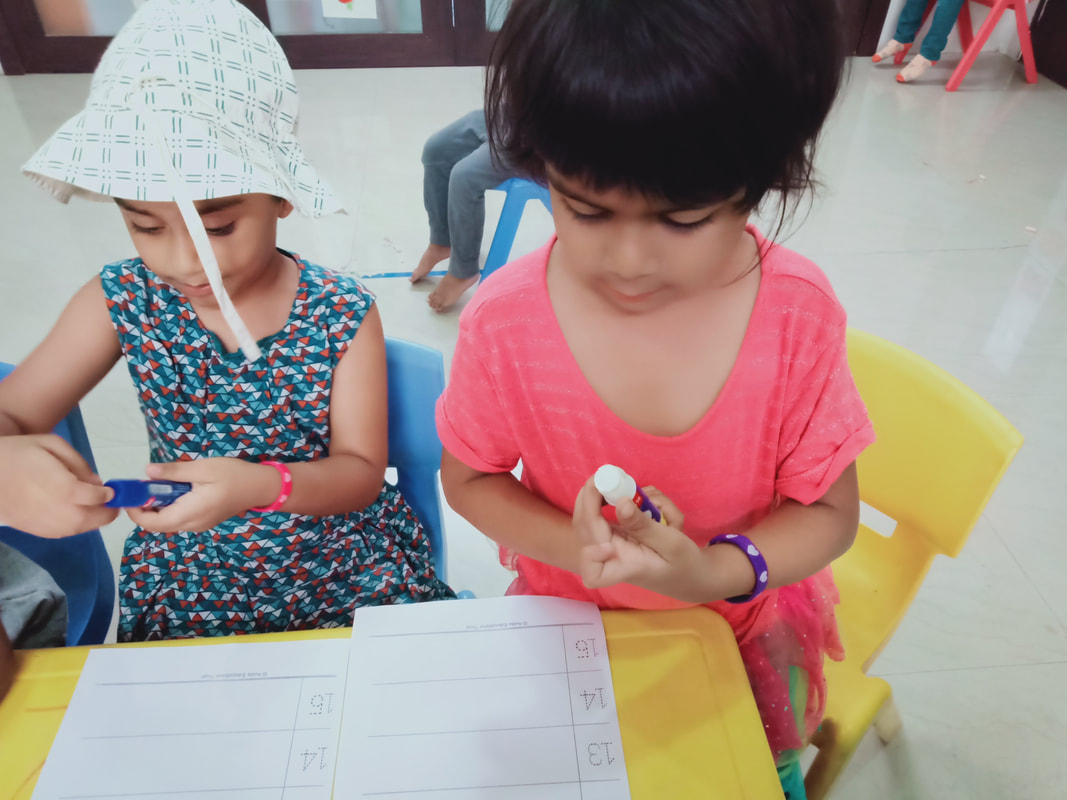
Another typical day for the 3 and 4 year olds at Sparkling Mindz where they were all seated at their usual yellow rectangular table. They were all given worksheets to do where they had to stick thermocol balls on the sheets given. They are usually given choices on how they would like to do the worksheets and what they would like to stick. As we were focusing on fine motor development, on this particular day, they were given thermocol balls to stick. They were each given a glue stick to use for themselves to stick. 
​

The glue sticks were of three colours: black, blue, and blue and yellow. An and H both wanted blue. By the time the glue sticks got to them, it was between blue, and blue and yellow. An and H start arguing on who gets to use the blue one. Both the glue sticks were handed over to both of them. At this point they both stared at me hoping I would take a call and hand over the blue to one of them to which I responded, "Okay. Please solve this problem you guys", and I moved onto the others observing how they were going to resolve this. 
Few seconds later they came up with a solution all by themselves!
An said," After we finish this one line, you give me the blue and I'll give you this. Let's exchange", to which H happily agreed, called me and told me how they had revolved their fight. 
Picture
It was such a beautiful sight to see them resolving their problems by themselves. If I had stepped in, I would have stolen that lesson, that they learned about solving problems by themselves and sharing, by giving them the solutions. By trusting their capabilities in solving their problems, I was able to strengthen my belief about children that even at such a young age, they are absolutely capable of anything that they put their minds to, which is a learning not just for them but also for me. As adults, we often step in to figure things out for the children without letting them figure it out for themselves. We often tend to forget that they are capable individuals with brilliant minds that can function independently without us having to interfere a lot of the times. Taking a step back a lot of the times will give them chances to step up for themselves and also enable them to believe that we trust them to solve their issues by themselves. And this, is beautiful.


Contributed by Sruthy Krishna, Learning Facilitator at Sparkling Mindz Global Preschool. 
#inspiringconfidentlearners
#youngachieversacademy
#sparklingmindzglobalschool
#everychildcansolveproblems

Comments

The Red Chair Problem - A Documentation

3/12/2019

Comments

 
​It was around 10:20am and our 4-5 year olds were setting their class up for snacks. Just then, the facilitator spotted Ad and Sh fighting for the red chair. The class had just one red chair and this was not the first time children were fighting over it. The facilitator intervenes and takes away the red chair from both of them.
 
F: Okay! Looks like we have a very serious problem.
Ab: Because of all of us!
F: What do we now? There is just one red chair and so many of us want to sit on that one chair.
Ash: I’m sitting on a yellow chair, Everyday I’m sitting on different, different chair.
F: People sitting on different chairs everyday, that’s great! Now, how can we solve this red chair problem?
Ab: No red chair (He meant, taking away the red chair)
(Ad, visibly very upset, takes a chair and sits away from the circle, making angry gestures.)
F: (To the class) Ad will calm down and tell us how he wants to solve this problem.
 
F (now addressing the whole class): Do you all have any suggestion for Ad?
Sh: I have! Maybe he can say sorry to the red chair and not fight with the red chair.
F: Was he fighting with the red chair or was he fighting for the red chair?
Ab: He was fighting for the red chair.
Ar (Raises his hand): Take away the red chair!
An: He can take the chair some of the days, he cannot take the chair tomorrow.
F: So you are saying, Ad can take the chair on some days and some days he can give it to others?
Ab: I have a solution, we can paint the red chair in different colors.
Ash (Interrupts): If we paint the red chair, all the paints will be over.
Ab: We can stick paper on the red chair and paint the paper.
F: Hmmm… Ad loves the red chair, if we change it to another color, would that solve the problem?
M: We all love the red chair. All of us love all the chairs.
F (To Av): Do you have a solution?
Av: The solution is when Ad is going to take the red chair, somebody else should take the red chair.
F: Do you think Ad will like it?
Av: If Ad wants red chair, we can just cover it with white.
F: How will that solve the problem? He still loves the red chair isn’t it?
Ab: Maybe we can get more red chairs.
Ta: Ma’am, I’ll give my red chair to Ad and take a different one.
F: You could do that, but Ad likes only that Red chair (The bright one).
Sh: Ma’am, all the other chairs are saying we love Ad.
Ad (still angry): (makes roaring noise)
T: Maybe I’ll tell everyone that Ad wants the red chair and please can you let him take the red chair?
F: Do you think it’s fair to let Ad take the Red chair everyday? Sh also likes the Red chair and she also wants to sit on it sometime.
T: Maybe, you can let him take the Red chair today.
F: OK, how about we agree on An’s idea? She said Ad can take it some days and give it to others on some days, Would that work with you Ad?
Ad: Today I’ll take it, tomorrow I’ll give it.
T: Maybe Sh and Ad can keep on exchanging.
An (Raising her hand): I should also get it.
 
Everybody else in class also started raising their hands one by one saying “I also want the Red chair”, and we decided to make a timetable and put it up in class so that everybody gets to sit on the red chair. Ever since then, there has not been a conflict regarding the Red chair.
 
Taking away the red chair would have easily solved the problem but that would have been momentary and would have robed the opportunity form children to discuss and arrive at a solution. Here, they not only displayed their reasoning and problem solving capabilities but also, in the process felt that their voices mattered. Encouraging or involving children in decision making and problem solving will help them build trust in themselves as well as creates a sense of ownership as the child feels understood and listened to. 

Contributed by Yashika CG, Learning Facilitator, Sparkling Mindz Global Preschool

#sparklingmindzglobalschool
#inspiringconfidentlearners
#youngachieversacademy
#everychildcan
Comments

Empathy as a culture - a documentation

2/12/2019

Comments

 
​During a story reading session with 5 year olds, children were feeling hot and wanted to turn on the fan. Ar and Av get up from their chair and run towards the switchboard at the same time. Av reaches first and turns on the fan and as an instant reaction Ar hits him.
 
(Facilitator (F) observing the scene calls out for them)
 
Av: Ma'am Ar hit me, he always hits me.
F(to the class): Do you all think Ar gets angry and hits people for no reason?
Class: No ma'am. 
Ar (angrily): I get angry when people don't let me do what I want to do.
F: I understand you get angry but, is it helpful to hit or hurt someone when you are angry?
Ar: Yes 
F (to the class): Do you all think hitting when angry is a good thing?
Class: No ma'am. 
T: Ar should talk to them.
F: Thank you T, do we all want to help Ar calm down when he is angry? 
Class: Yes ma'am.
F (to Ar): How do you want everyone to help you calm down?
Ar: By not talking.
F (To the class): So, can we all agree to not talk to Ar when he is angry, he'll calm himself down and then join us.
Class: Yes ma'am.
F (to Av): Why do you think Ar hit you?
Av: Because I saw Ar run and I ran before him and turned on the fan.
F: What do you think you could have done instead?
Av: Let him (switch) on the fan, next time I will get a chance.
F (to Ar): What do you think you could have done?
Ar: Ask him.
F: So, do we all agree to use our words next time we don't like something?
Class: Yes ma'am.
 
Be it a child or an adult, helping them become aware of their own emotions and learning to express them in resourceful manner is a very important skill to learn for life. When children start this early, it helps them empathize with themselves and figure out mechanisms to understand, accept and cope with their emotions better, building emotionally resilient adults of the future. 

Contributed by Yashika Ganesh, Learning Facilitator, Sparkling Mindz Global Preschool and edited by Sreeja Iyer, CEO, Sparkling Mindz.
​
#sparklingmindzglobalschool
#inspiringconfidentlearners
#youngachieversacademy
#everychildcanempathize
Comments

5-year olds learn to collaborate

19/11/2019

Comments

 
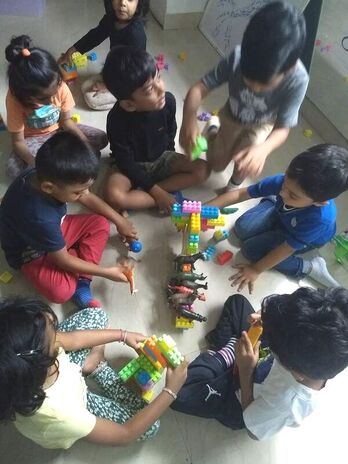
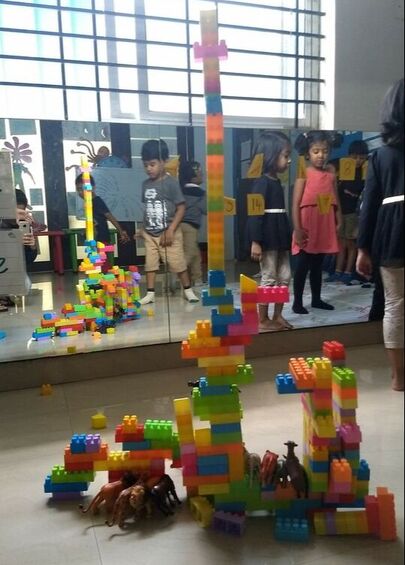
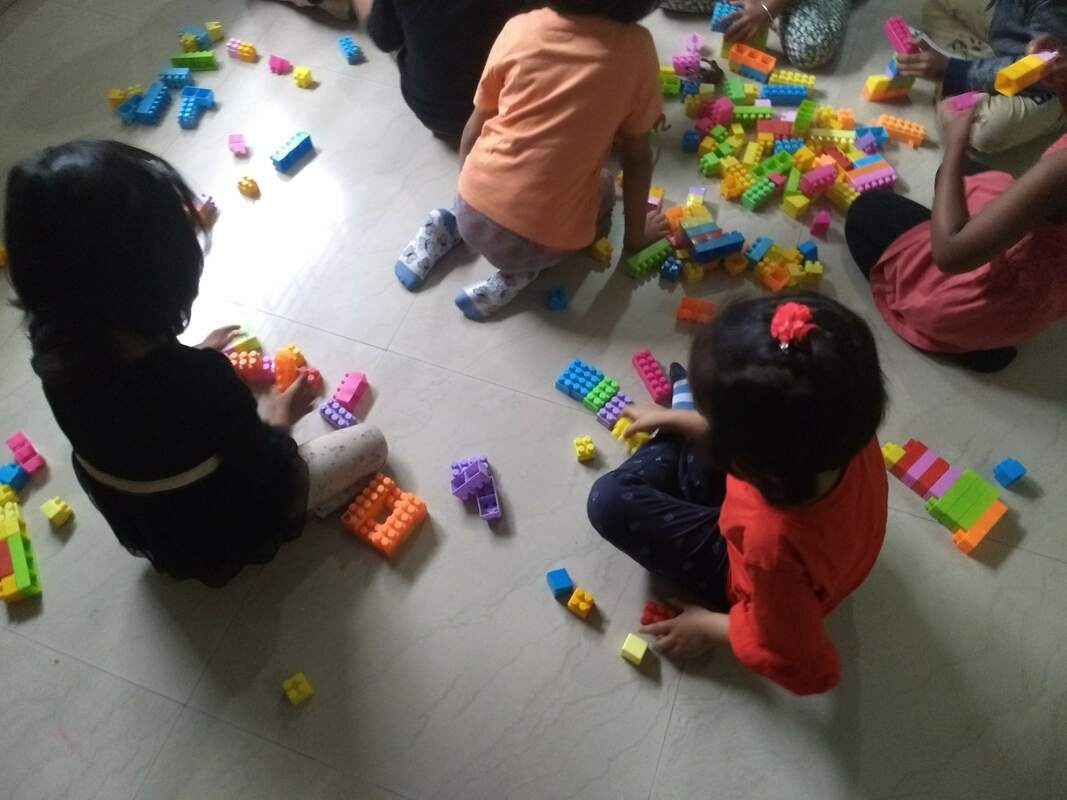
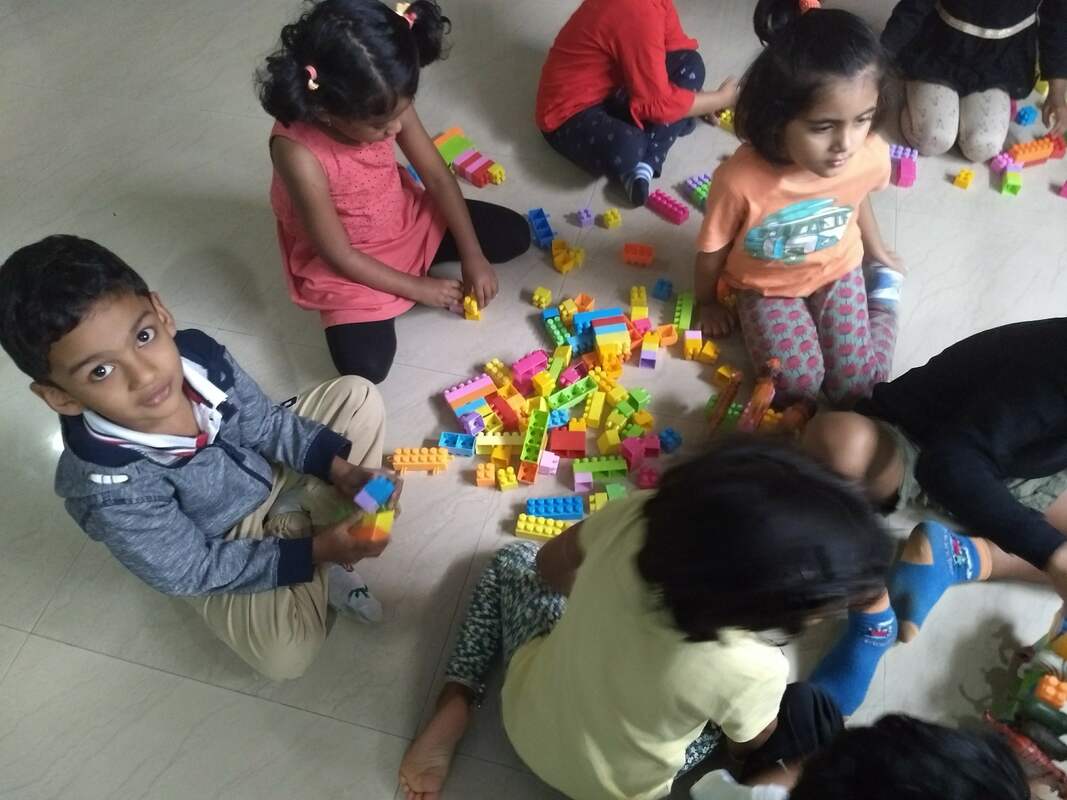
The facilitator at SM preschool noticed that the class of 12 four to five year olds were establishing comfort zones and forming smaller groups within the class. They played with the same group of children and struggled with making new friends. To address this issue, on one of the morning hours, the facilitator set up an invitation to play with lego blocks and animal toys.
 
Children were given the choice to create something together as one team and were given 15 minutes. Even though children began to create something together, towards the end of 15 minutes there were two smaller groups and few children playing individually on their own.
​
Picture
Picture
At the end of 15 minutes, children were asked to stop, leave whatever they were doing as it is and move to the side. Each of them were asked what their team was doing but they could only recollect and say what they were doing individually.

The facilitator reminded them of the initial goal of the activity and posed a question at the children, "What do you all think we can do now?"
"Maybe we can join everything together", T suggested and everybody agreed.

The children were given another 15 minutes to complete their task. At the end of that 15 minutes and a lot of mini conflicts, they had together built a gigantic animal carrier.

​
Picture
Picture
When asked what they liked and disliked about working together as a team, the few things that emerged were:

Sh: We made so many different things and we attached it, I didn’t like it when J destroyed it.
T: I learn’t to do a big building with so many blocks with the team, I didn’t like when Ar destroyed what I made.
Ad: I liked to put the animals together with the team, I didn’t like J destroying it.
Ar: My team helped me make the big building, I didn’t like that there are a lot of items that are not used. I felt very bad when my team was not listening, only V was listening.
An: I learn’t how to build animal home with the team. I didn’t like everybody screaming and I was not able to hear others. Everyone was very loud screaming “I want to put it”.
Av: I liked building the animal carrier truck. I didn’t like that everyone was shouting.
Ad: I like about my team when they were doing a great building work.

So it is with anytime children work together, there is bound to be conflict, lack of feeling listened to, screaming and a lot of me-me-me. Even if at the end of it what they produce looks amazing the feeling of how the experience was stays with them and they continue to avoid collaboration.

As children listened to how they all felt at the end of the activity it started to create bridges between one heart to another and slowly mend fences from one child to another. At the heart of good team work and collaboration lies trust and at the heart of that lies empathy and listening with an open, non-judgmental mind is a good start!

Collaboration and team work are two of the most essential life skills. By learning to make new friends and collaborating with them at an early age, children become more tolerant and appreciative of others' ideas and develop a sense of social adeptness which they are going to carry with them through adulthood.

#sparklingmindzglobalschool
#inspiringconfidentlearners
#youngachieversacademy
#everychildcan

​Contributed by Yashika CG, Asst. Learning Facilitator at Sparkling Mindz.
Comments

Conflict management lessons from 5 year olds

18/3/2019

Comments

 
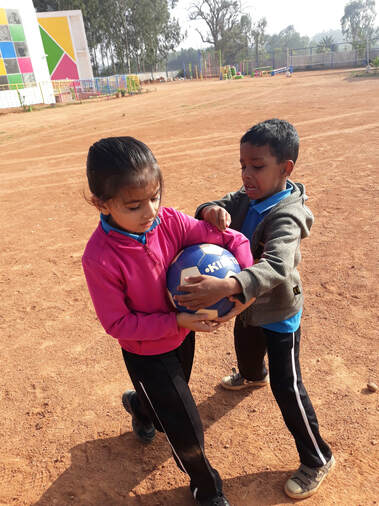
​A bright sunny morning, our 5-6 year olds were at the playground. They were divided into two teams to play a game of Dodge Ball. The rules were set and the teams were rearing to go. An had the ball in her hand as it was decided that she would start the game but Av wanted to be the one to start the game. He was trying to forcefully pull the ball away from An's hands. 
Picture
​Av: I want to throw the ball first
An: No! I want to start the game, Av. Ma’am said that I can start and R and D in our team have also agreed. R only came and gave me the ball.
Av: No, this time I want to start the game.

Av, as if remembering that politeness can go miles, immediately changes his stance.

Av (politely): An, can I please have the ball?

An would have usually given in to requests like these just to avoid a fight is quite assertive this time She is in no mood to part with the ball just because someone else is asking. It is rightfully hers!

An (softly but firmly): No, Av, I want to have the ball this time. You can have it the next time, we play the game.

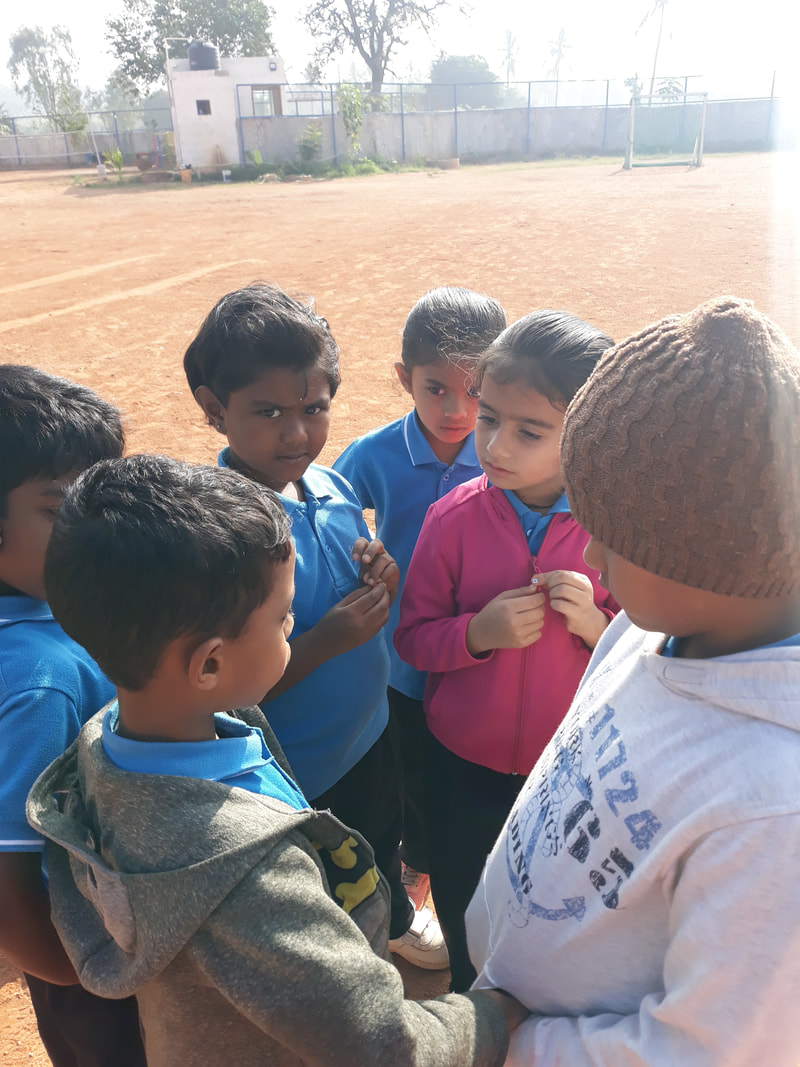
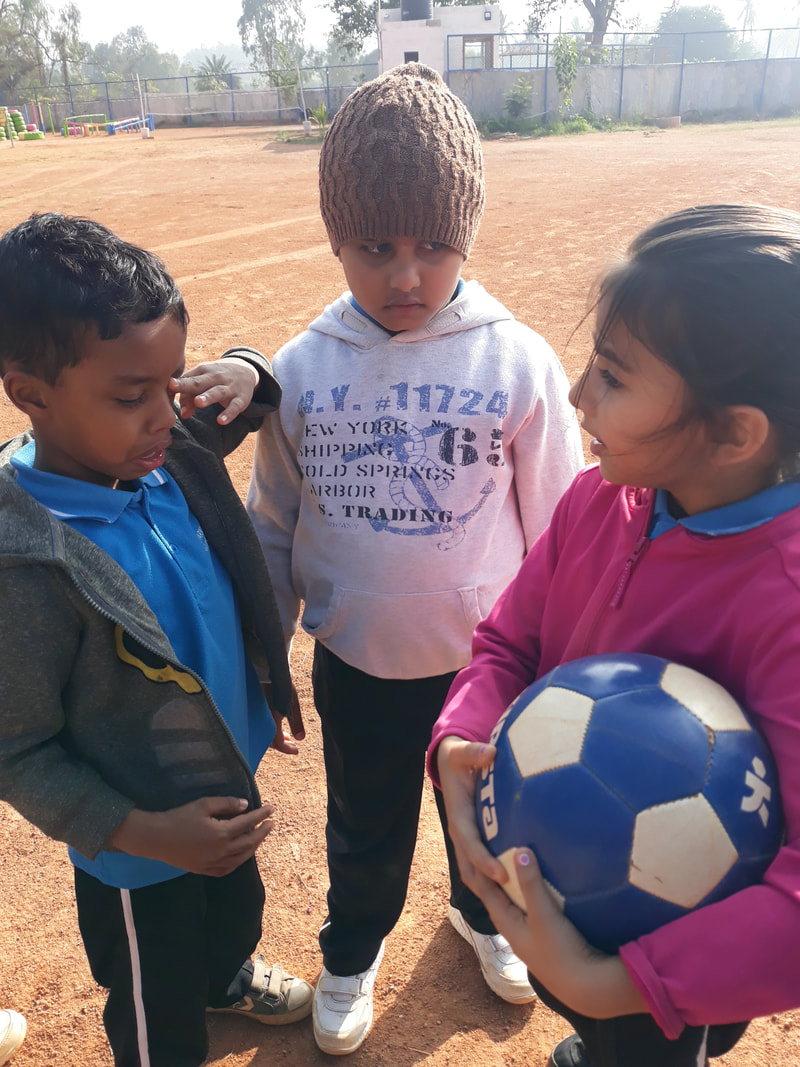
Seeing that his repeated requests are not working Av starts to cry. Soon the other children gather around. Some try to coax An while others try to convince Av, as they are keen on
getting back to the fun of playing the game. 

​D (walking up to An, trying to negotiate): An, see how Av is crying. Let him have the ball.
Av, now has an even more sad expression, looking for more supporters.
Few of the children agree saying Av should have the ball.
Av: Yes, An look how I am crying. Let me have the ball.
An is still not convinced.

D: Crying children only should have the ball. An, give the ball to Av.
Then turning to me, he says,
D: Ma’am, crying children should have the ball. Please tell An to give the ball.
Me: Okay, so every time a child cries, and we give the child what he wants, what will the child
learn?
Na: He will think, if I cry, I will get it
Me: Exactly, so is that a good solution?
Most of them disagree.

Me: Then D, if we now give the ball to Av because he is crying, are we helping Av?
D: No, ma’am.

This idea is dropped and they start looking for other ways to solve the problem. Av now decides
to wipe away his tears realizing that this is not working. 
​
Picture
Meanwhile, C now resorts to another way of trying to solve the problem - seeking the help of the Almighty! I notice that he has retreated to a quiet place away from the
group and is standing there with folding hands, looking up to the sky.
Me: C, what are you doing?
C: Ma’am, I am praying.
Me: What are you praying for?
C: Asking God to solve this problem!


Now the children have separated into two groups, one group working on convincing Av and the
other group on convincing An. In Av’s group, D comes up with a proposal.
D: Ok, Av, you do one thing. When we go back to the class, you hold the ball.
Av suddenly brightens up and agrees. Now this group walks up to the other, to see if An would
agree to this proposal.
D: An, you can start the game now. When we go back to class, Av will hold the ball. Okay?
An: I’m okay with that

With Av and An agreeing to D’s proposal, finally the problem was resolved and the game
resumed. In the process, all of them had flexed their conflict resolution muscle and gained confidence that they can figure out solutions to problems no matter how unsolvable and unreasonable they may sound to begin with.
​
As we step back and reflect on the incident, we realize that there are several things that children did right
1. They didn't give up in the face of repeat set backs to solve the problem
2. They came up with newer solutions from different dimensions, it was never more of the same
3. They didn't write off or judge either of their friends
4. They didn't take sides
5. They resolved the issue as a class, as a team
6. Despite emotions running high, they kept an ear open for a suggestion that would work
7. They understood that, perhaps, the dispute was just about who got to hold the ball, not about who started the game, that led to their creative solution (showing sprouts of empathy here!)
8. At no point, did they ask the facilitator to solve the problem for them, they persevered, they trusted themselves enough to continue working on it
9. The facilitator stepped back and only stepped in when there was a pull from the children (only to the extent necessary)

Children who experience trust in their capabilities from adults around them and learn to take ownership of their relationships, learning and more become confident problem solvers. They are an inspiration to each one of us, as children should be!

We wonder what inspirational lessons we will learn from our 5 year olds next?

Documented by Jennifer Christy, Learning Facilitator at Sparkling Mindz Global Preschool
Edited by Sreeja Iyer CEO Sparkling Mindz Global
Comments
Forward>>

    RSS Feed

    RSS Feed​

    Sparkling Mindz is an organization with a vision to create millions of confident thinkers and communicators amongst our children!

    ​You can read more on...

    CEO's FB Page

    Archives

    June 2025
    May 2025
    March 2025
    February 2025
    January 2025
    December 2024
    November 2024
    October 2024
    August 2024
    July 2024
    June 2024
    April 2024
    February 2024
    January 2024
    December 2023
    October 2023
    June 2023
    April 2023
    March 2023
    December 2022
    October 2022
    September 2022
    August 2022
    June 2022
    May 2022
    April 2022
    March 2022
    February 2022
    January 2022
    December 2021
    November 2021
    August 2021
    July 2021
    June 2021
    May 2021
    April 2021
    March 2021
    February 2021
    January 2021
    December 2020
    November 2020
    October 2020
    September 2020
    August 2020
    July 2020
    June 2020
    May 2020
    April 2020
    March 2020
    February 2020
    January 2020
    December 2019
    November 2019
    October 2019
    September 2019
    May 2019
    April 2019
    March 2019
    February 2019
    December 2018
    July 2017
    June 2017
    June 2016
    May 2016
    April 2016
    September 2015
    May 2015
    April 2015
    January 2015
    July 2014
    April 2014
    February 2014
    December 2013
    November 2013
    October 2013
    September 2013
    January 2013
    November 2012
    October 2012
    August 2012
    June 2012
    March 2012
    February 2012
    December 2011
    November 2011
    October 2011
    September 2011
    July 2011
    June 2011
    May 2011
    April 2011
    March 2011
    February 2011

    Categories

    All
    21
    21stcenturylearning
    2 Year Olds
    3 Year Olds
    4 Year Olds
    4-year-olds
    5 7 Year Olds
    5-7 Year Olds
    5 Year Olds
    5-year Olds
    8 13 Years
    8-13 Years
    Activity Modules
    Add
    Adhd
    Afterschool Program
    Age Appropriate Session
    Age-appropriate Session
    Age Group
    Awards And Recognition
    Bangalore
    Being Changemakers
    Book Reading
    Child Development
    Children Making Friends
    Children's Activities
    Children's Workshop
    Children's Workshops
    Collaboration
    Communication Skills
    Communication Skills Workshop
    Community
    Concluding Sessions
    Confidence
    Confident Learners
    Confident Thinkers
    Conflict Management
    Conscious Parenting
    Creative Individuals
    Creative Thinking
    Creative Thinking For Kids
    Creative Thinking Summer Camp
    Creative Thinking Summer Camps
    Creative Thinking Tools
    Creative Thinking Workshop
    Creative Thinking Workshops
    Creativity
    Creativity For Children
    Critical Thinking
    Critical Thinking Workshop
    Curiosity
    Deep Learning
    Deep Thinking
    Dep
    Developing Creativity
    Distracted Behavior
    Documentation
    E
    Emergent Curriculum
    Emergent Play
    Emotional Quotient
    Emotional Vocabulary
    Emotions In Learning
    Empathy
    Everychildcan
    Experimenting
    Exploring Emotions
    Facilitation
    Facilitator Discussion Diaries
    Flexibility
    Flexible Brain
    Following Your Passion
    Fun Activities
    Fun Activities For Children
    Fun Modules
    Fun Places For Children
    Game Based Learning
    Games For Kids
    Getting A Quiet Child To Talk
    Growth Mindset
    Holistic Development
    Hyperactivity
    Imagination
    Imagining-with-blocks
    Impulsivity
    Innovative Learning
    Innovators
    Inquisitive Children
    Inspiration
    Inspirational Stand Up
    Inspiring Confident Communicators
    Inspiring Confident Learners
    Interpersonal Skills
    Invitation To Play
    Joy
    Joyous Learning
    Just Books
    Keys To Success
    Kindness
    Lateral Thinking
    Learning For Keeps
    Learning From Play
    Learning Styles
    Learning To Make Friends
    Light Play
    Logical Reasoning
    Making Connections
    Motivation Skills
    Music
    Natural Things
    Nature Of Creativity
    Nature Walk
    New Age Classrooms
    Open Ended Thinking
    Openness To New Expeiences
    Ownership In Children
    Parenting As A Skill
    Parent Invites
    Parent Testimonials
    Parent Workshop
    Peer Intervention
    Play Based Learning
    Playschool
    Poem For Children
    Poem For Children 8+ Years
    Positive Attitude
    Preschool
    Preschool Activities
    Preschool Games
    Preschoollibraryactivity
    Pretend Play
    Problem Solving
    Programs For Children
    Reframing
    Regg
    Reggio Documentation
    Reggio Emilia Inspired Preschool
    Reggio-emilia Inspired Preschool
    Reggio Emilia Inspired Preschool India
    Reggio-emilia Inspired Preschool India
    Reggio Emilia Inspired School
    Reggio Emilia Preschool Bangalore
    Resolving Disputes
    Resolving Fights Amongst Children
    Role Plays
    Self Expression
    Self Identity
    Self-identity
    Self Learning
    Self-learning
    Selflove
    Sensory Play
    Shy Child
    Shy Child To Talk
    Skills
    Social Emotional Learning
    Social-emotional Learning
    Sparkling Mindz
    Sparkling Mindz Stories
    Sports
    Stories
    Story Telling
    Story-telling
    Success Stories
    Summer Camp
    Summer Camp 2012
    Summer Camps
    Takehome
    Team Work
    Thinkers
    Thinking
    Thinking As A Habit
    Thinking As A Process
    Thinking Corner
    Thinking Program
    Thinking Skill
    Thinking Skills
    Thinking Skills For Children
    Thinking Skills Program
    Tinkering
    Traditional-classroom
    Trust Based Parenting
    Understanding-children
    Value Based Learning
    Visit To Park
    Visualization
    Weekend Activities For Children
    Wittyconversations
    Wonder Based Learning
    Workshop For Kids
    Workshops For Children
    Workshops For Kids
    Young Achievers Academy
    Young Thinkers Academy


Locations
Hennur - 8/4, Kannuru, Bidarahalli Hobli, Hennur-Bagalur Road, Bangalore 562149
Kalyan Nagar - 408, 2nd Floor, 5th Main, HRBR Layout 2nd Block, Kalyan Nagar, Bangalore - 43

Contact Details
Mobile: +91 9900080331

                 +91 9900080332
Phone: +91 80 4111 5607
Email: [email protected]

Company

About Us
Team
​
Child-Led Missions
Careers
Media

Support

Contact
FAQ
Terms of Use
​Privacy Policy
© COPYRIGHT 2011-2026 AVIDA EDUCATIONAL TRUST.